Friday, 28 September 2018

Eastern Forest Outskirts


Most of the land to the south and west of the hot plains is covered in dense jungle and rainforest. However, much of the eastern parts of these forests have recessed as a result of Cursor activity. Although the climate should allow the area to be more densely forested, the species of Cursor that inhabits the mossland just east of forest prevents many trees from growing there, since they’re consumed as small shrubs as the animals graze. The change from jungle to mossland is gradual, with an area of open woodland interspaced with mossland between the two. It is the wildlife that inhabits this area that will be discussed here.


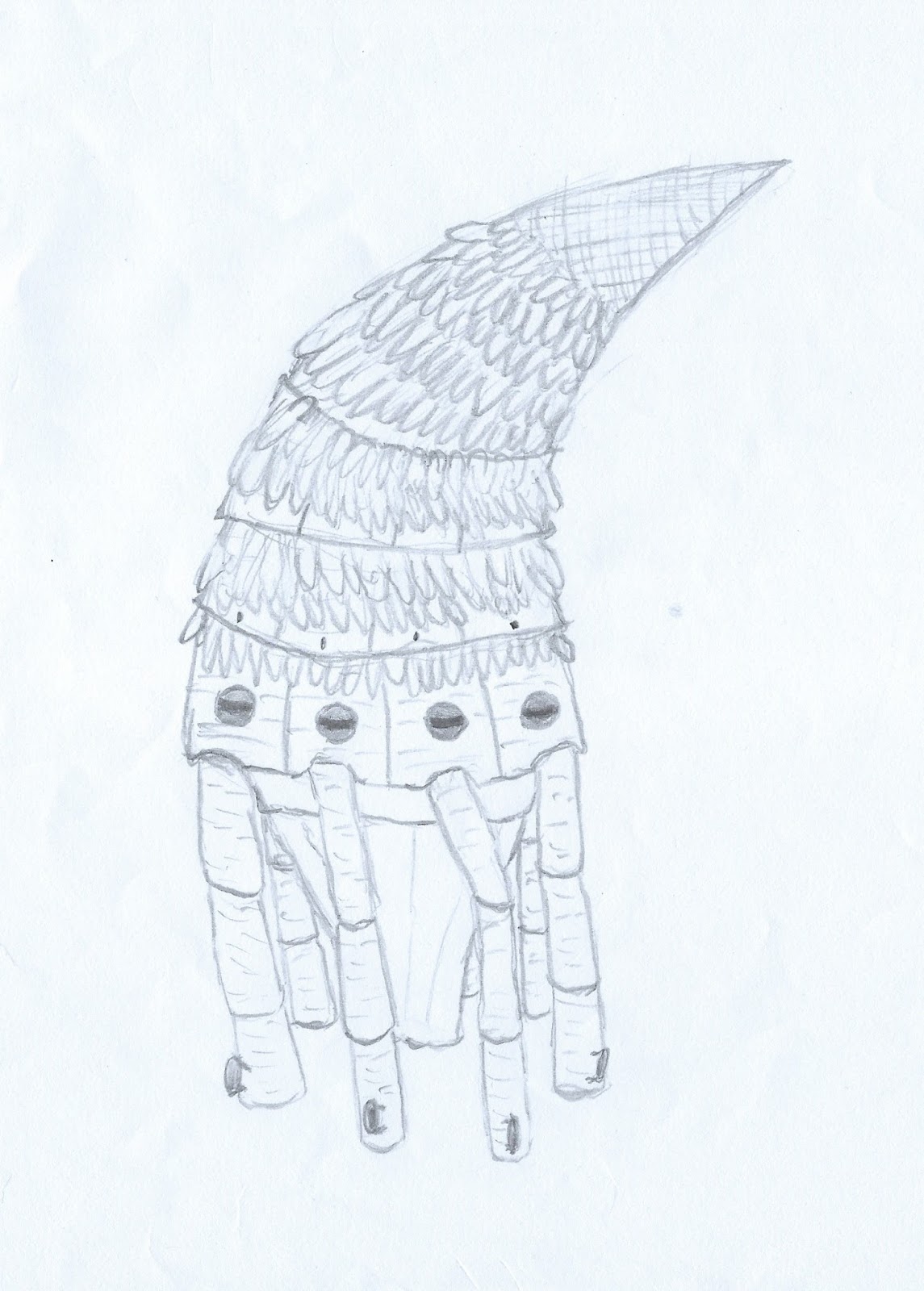
Virgata purpura


Size: 1.5 metres tall discounting tail

Diet: leaves, grass, sometimes fruit and seeds

Habitat: savanna, woodland outskirts

Colouration: purple, with stripes of light and dark purple and black

Symmetry: 6 fold radial symmetry

Reproduction: sexual, all hermaphrodites. Lays eggs.

These animals are one of many species belonging to the fairly large family Folivoridae, a lineage closely related to Muscivoridae. Like muscivorids, they have a long proboscis, but they are distinguished from the related group by a longer and thinner tail with a tip adapted for grasping food. Although their tails are their primary means of gathering food, their proboscises haven’t atrophied; they are still useful for meeting the tail half way after food is gathered, so they needn’t reach all the way to their mouth. Their proboscis also allows them to drink ammonia without having to bend down.

Virgata purpura prefer to inhabit more open spaces than most other folivorids, and engage in a greater extent of herding behaviour, comparable to that of muscivorids. They have a slight build with fairly long legs and are quite agile runners, allowing them to effectively escape from predators even in lightly forested areas. Their exoskeletons and feathers are patterned in stripes, which not only serves to break up their form but visually confuses predators when they’re moving quickly in large groups. Since they’re small enough that the largest Acuti species of the area (who possess colour vision) are able to hunt them, they are purple in colour in order to blend in with the purple vegetation around them.

Taxonomic classification
Tree: Amthalassavitae
Domain: Parvigrana
Kingdom: Hydrogenia
Phylum: Plurafistulata
Superclass: Exoskeletida
Class: Lactilinguida
Subclass: Plumalia
Order: Herbivora
Family: Folivoridae
Tribe: Velocini
Genus: Virgata
Species: V. purpura


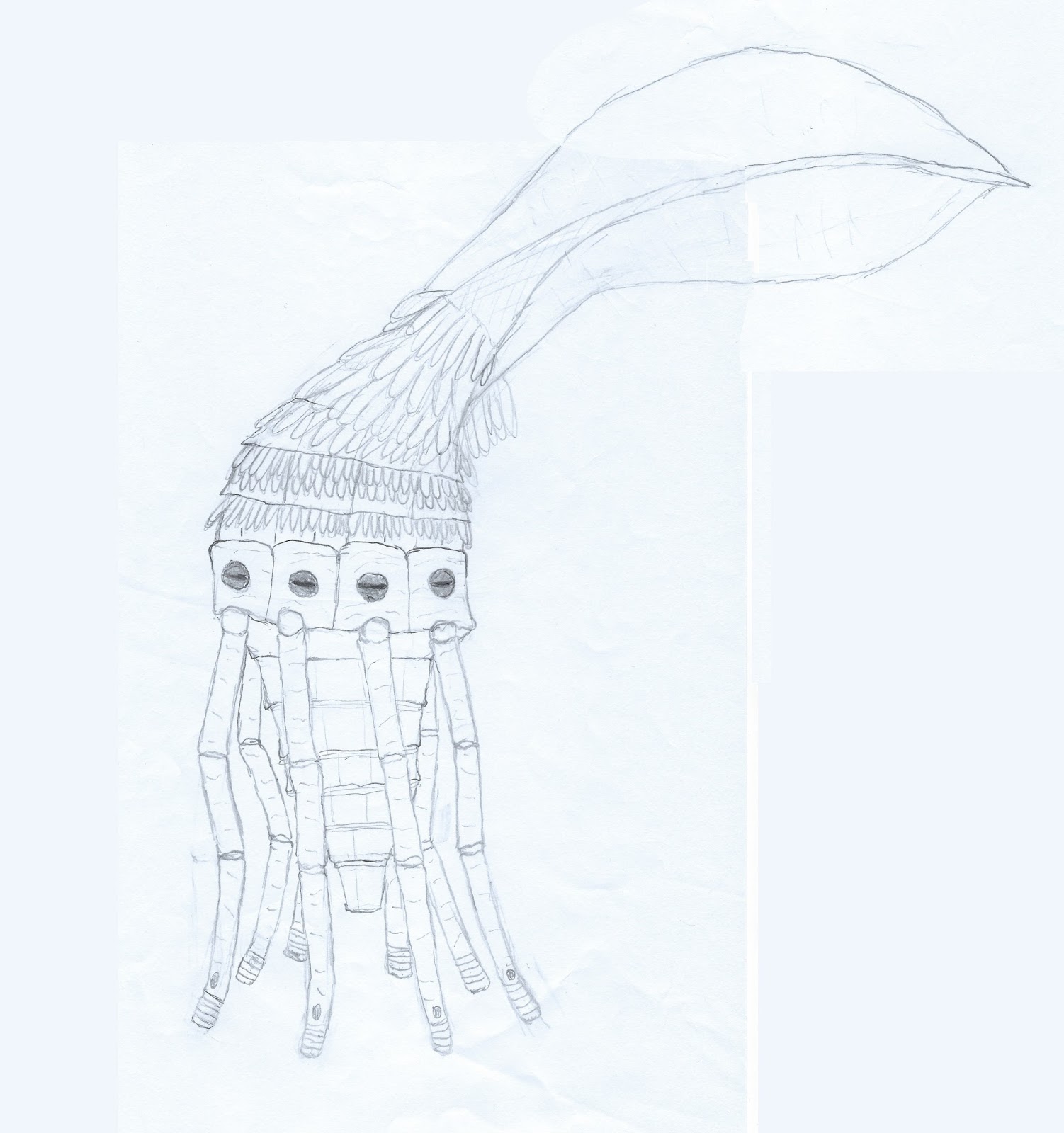
Procera collaris


Size: 4.5 meters tall up to tail, 8 meters with tail stretched up

Diet: leaves and fruit

Habitat: open woodland, savanna

Colouration: bright green and blue patterns, circle of yellow around the base of the tail

Symmetry: 8 fold radial symmetry

Reproduction: sexual, all hermaphrodites. Lays eggs.

Like Virgata, this species also belongs to the family Folivoridae. However, the two species rarely run into competition, since Procera eat far higher leaves than Virgata do. Their long tails and legs allow them to reach the high and relatively untouched foliage of some of the tallest trees of the forest outskirts, almost completely ignoring those in reach of Virgata. In order to support their weight at such heights they have a relatively light build, with a proportionately short body in comparison to their leg and tail length. Without their proboscis they would be unable to reach such heights, as squatting down to reach ammonia to drink is impractical for them.

The species is too large to be hunted by acuti, and since their only natural predators are the colour blind venators they are able to use the colour of their feathers for display. However, although colourful, the shade of their feathers is patterned in such a way so as to break up their form from the point of view of any colour blind animal. This way, they are able to stand out to other members of their own species, with colouration distinct from the foliage around them, while at the same time being effectively camouflaged from their predators.

They have a social structure based on a similar system of grooming as Minopuniceus, but with the sharing of fruit among group members playing an additional role. They don’t always eat the food they gather straight away; while they will often eat leaves as they find them, when particularly large fruit is found they instead keep them in case they wish to trade it to win the favour of other members of the group. Because of this dominant members of a group will usually eat far more fruit. There is usually a single individual at the very top of the hierarchy, with the yellow feathers at the base of their tail particularly prominent and brightly coloured. This individual is most often also the tallest.

They are very intelligent animals, with more complex relationships than the otherwise socially similar Minopuniceus. As such they have much smaller group sizes than both Minopuniceus and the related Virgata, allowing them to keep track of the group dynamics and know everybody more intimately. They tend not to gather closely together, and do not possess the same herding instinct common among muscivorids and many folivorids. They simply don’t need to live in large groups, as their size offers enough protection on its own.

Taxonomic classification
Tree: Amthalassavitae
Domain: Parvigrana
Kingdom: Hydrogenia
Phylum: Plurafistulata
Superclass: Exoskeletida
Class: Lactilinguida
Order: Herbivora
Family: Folivoridae
Tribe: Procerini
Genus: Procera
Species: P. collaris


Eastern Tree Lethargid
(Ramiflagellum solum)


Size: 30 - 40 centimetres long on average

Diet: meat, often preys on animals larger than itself

Habitat: arboreal

Colouration: brown, reddish brown or purplish brown

Symmetry: bilateral, originally evolved from radially symmetrical animals

Reproduction: sexual, all hermaphrodites. Lays eggs.

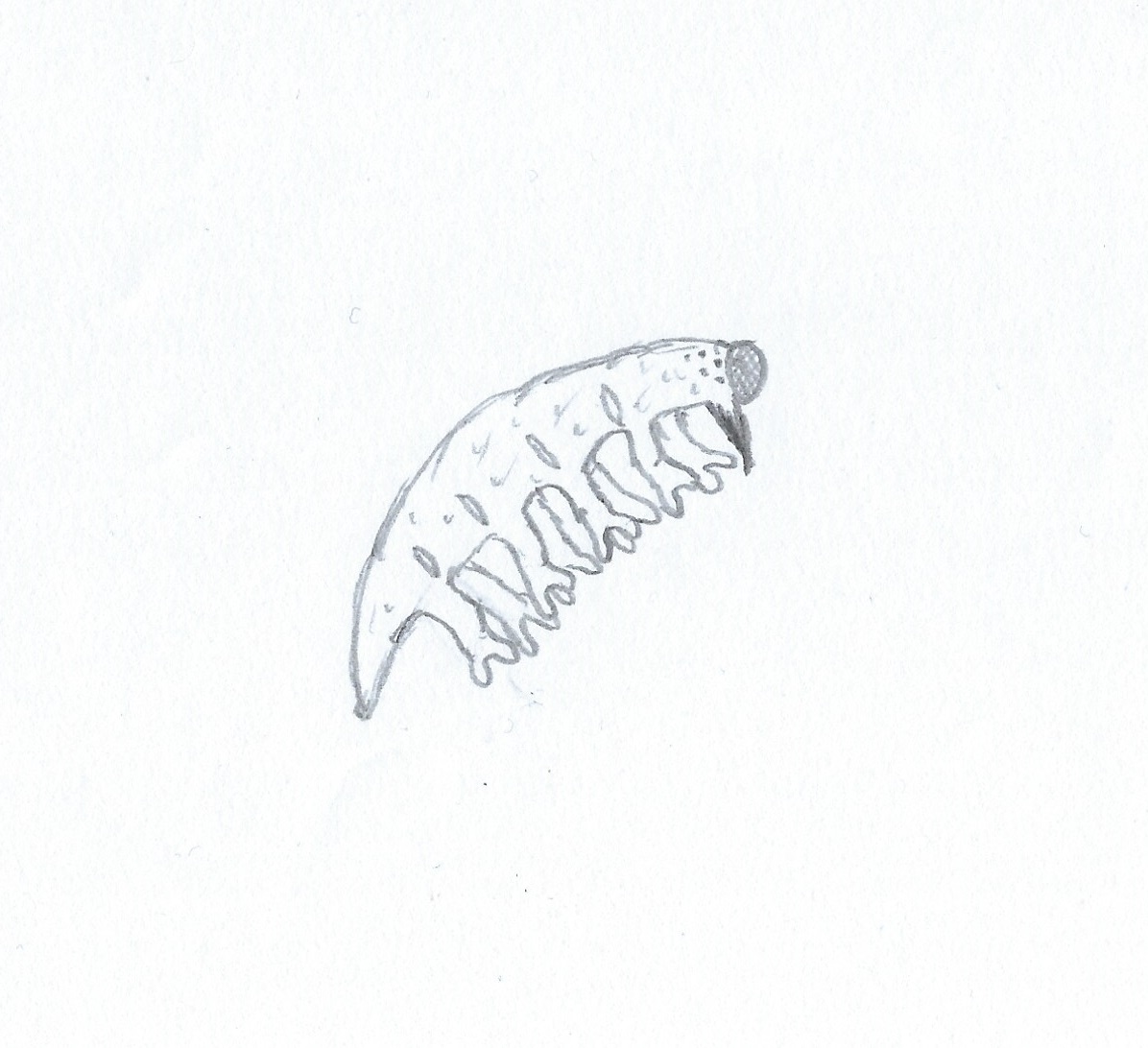
Venators are a very large and successful class of animals, and although most are predatory they fill a large range of niches and inhabit a large range of environments. Not all venators focus on pack hunting and chasing down prey like Leolupus. Some, namely those belonging to  the family Lethargidae, are much smaller and instead have a much more solitary and cunning approach to hunting, which involves hiding and waiting for their prey to approach. They have very long lashing tongues with sharp barbs, and many species utilise toxins or bacteria to make up for their lack of size or strength.

Ramiflagellum solum is a lethargid much more adapted to climbing than other members of the family, spending the vast majority of its time in trees. Their genus is distinct from other members of the family by their smaller size and the presence of opposable, grasping digits on all six limbs, as well as a longer and more elastic tongue than most other species. While a small size is beneficial to terrestrial arboreal animals, it is even more so on Amthalassa. Many trees are lightweight and only supported by the lift they’re afforded by sacks of hydrogen, so if any animal is large enough to overcome this lift on a given branch the branch will collapse. Because of this, members of the genus Ramiflagellum are comparatively weak and lightweight even compared to other related groups, so they have to rely even more on their ability to hide.
When a prey animal is sighted, Ramiflagellum solum will lash its tongue out from the tree concealing it, using its well-developed senses and accuracy to target weak spots or gaps between exoskeleton sections. If the strike is successful, and the teeth pierce the animal’s flesh, a form of modified, toxic stomach acid that is kept on the tips of its teeth is injected into the animal’s blood. This venom will slowly weaken the animal, and Ramiflagellum will stealthily follow it until it eventually falls unconscious and becomes easy to kill. This way, Ramiflagellum is able to take down prey far larger than itself.
Although primarily arboreal, they spend more time on the ground than their cousins deeper into the rainforest further west, and lack many of their adaptations such as a prehensile tail.

Taxonomic classification
Tree: Amthalassavitae
Domain: Parvigrana
Kingdom: Hydrogenia
Phylum: Plurafistulata
Superclass: Exoskeletida
Class: Venatores
Order: Insectilupiformes
Family: Lethargidae
Genus: Ramiflagellum
Species: R. solum


Woodland Septacaud


(Ramicauda orientalis)


Size: 60 centimetres to 1 metre

Diet: fruit and leaves

Habitat: arboreal

Colouration: purple

Symmetry: radial (seven fold)

Reproduction: sexual, all hermaphrodites. Lays eggs lacking hard shells in bodies of ammonia.

These animals inhabit the wetter and more densely forested part of the area, spending most of their adult lives high in trees but returning to the ground to lay eggs. These eggs are laid in ponds, where the aquatic, snake-like larvae will spend all their time until they’re developed enough to survive on land.

Above: Ramicauda disguising itself on a tree branch
Like most Septicauds, Ramicauda can use hydraulic pressure to stretch their tentacles to several times their resting size, making them well adapted to tree swinging in their arboreal habitat. They also have the ability to change their shape slightly by adjusting the hydraulic pressure under their skin, allowing them to effectively disguise themselves from predators. This ability is also used for signalling within their species.
Above: A young Ramicauda in its aquatic larval state


Taxonomic classification
Tree: Amthalassavitae
Domain: Parvigrana
 Kingdom: Hydrogenia
 Phylum: Plurafistulata
 Superclass: Multicaudata
 Class: Septicaudata
 Order: Polymorpha
 Family: Ramicaudidae
 Genus: Ramicauda
 Species: R. orientalis


 Hinnuleus occidentalis


Size: 90 centimetres on average, discounting tail

Diet: leaves, moss, fungus, sometimes fruit and seeds

Habitat: woodland

Colouration: red, purple and brown, usually in a pattern that breaks up their form

Symmetry:  8 fold radial symmetry

Reproduction: sexual, all hermaphrodites. Lays eggs.

Hinnuleus is a group of folivorids much smaller than Virgata purpura, preferring to make use of their small size to hide in the dense foliage of the woodlands at the expense of running ability. They are very well camouflaged, but their small size doesn’t allow them to reach high leaves. Instead they will usually focus on leaves closer to the ground, although this is more of an advantage than anything else; with Hinnuleus, Virgata and Proceri focusing on leaves at three different heights, they are all able to occupy the same woodland in spite of their similar diets without running into competition.

Taxonomic classification
Tree: Amthalassavitae
Domain: Parvigrana
Kingdom: Hydrogenia
Phylum: Plurafistulata
Superclass: Exoskeletida
Class: Lactilinguida
Subclass: Plumalia
Order: Herbivora
Family: Folivoridae
Genus: Hinnuleus
Species: H. occidentalis


Duocaputina
(Cornucerva magna)


Size: 1.4 to 1.7 metres long

Diet: primarily fungi, sometimes shrubs, moss or kelp tree leaves

Habitat: woodland

Colouration: reddish brown

Symmetry:  biradial

Reproduction: sexual, all hermaphrodites. Lays eggs.

There are multiple occasions on Amthalassa where initially radially symmetrical animals have become at least partially bilaterally symmetrical. This usually happens in faster animals, so they can become more specialised at running in a single direction. Duocaputina is one such case. This group is actually a member of the family Folivoridae, but have changed much from the basal body plan of the group. To say they’re bilaterally symmetrical isn’t entirely accurate; they’re biradially symmetrical, with two distinct lines of symmetry rather than one. They have a distinct top and bottom, and sides of the body distinct from the front and back. However, the front and back of the body are identical, with one “head” on either end. This is probably advantageous in that the animal can begin running in either direction upon sighting a predator, without having to turn before running as much as they’d otherwise have to if they were purely bilaterally symmetrical.

The animal’s mouth is underneath its body. Since their tail isn’t as long as that of most other folivorids, as it has been reduced in size to make the animal more aerodynamic for running, they rely on their proboscis for feeding. Because of this, they are only usually able to eat food off the ground, so their diet primarily consists of fungi growing on the forest floor. However, they will occasionally use their weight to pull down smaller kelp trees by walking over them, allowing them to reach their leaves.

The genus Cornucerva is distinguished from other members of the tribe Duocaputina by the presence of horns, as well as a particularly thick, shell-like exoskeleton on the back and “heads”. They use these horns to settle in-group disputes, as their primary means of intraspecies fighting is head-butting. Sexual selection also played a role in the development of horns.

Taxonomic classification
Tree: Amthalassavitae
Domain: Parvigrana
Kingdom: Hydrogenia
Phylum: Plurafistulata
Superclass: Exoskeletida
Class: Lactilinguida
Subclass: Plumalia
Order: Herbivora
Family: Folivoridae
Tribe: Velocini
Subtribe: Duocaputina
Genus: Cornucerva
Species: C. magna


Caudarostrum externum


Size: 20 - 50 centimetres, not including tail

Diet: seeds, leaves and fruit

Habitat: arboreal

Colouration: purple

Symmetry:  8 fold radial symmetry

Reproduction: sexual, all hermaphrodites. Lays eggs.

Although most folivorids use their tails graspers to gather food, they are usually very poor at biting up food with it. However, there is a branch of Folivoridae that have developed hard beaks at the end of their tails. Although the ancestral form was likely a reasonably large herbivore, most extant species are much smaller than is the norm for folivorids, and many, such as Caudarostrum, are even tree dwellers.

Caudarostum spends almost all of its life hanging from trees with its hook-like claws as it browses for food with its beak. Its beak is particularly well adapted for eating seeds, which make up a large portion of its diet.

Taxonomic classification
Tree: Amthalassavitae
Domain: Parvigrana
Kingdom: Hydrogenia
Phylum: Plurafistulata
Superclass: Exoskeletida
Class: Lactilinguida
Subclass: Plumalia
Order: Herbivora
Family: Folivoridae
Subfamily: Caudarostrinae
Tribe: Caudarostrini
Genus: Caudarostrum
Species: C. externum

Fresh Ammonia Fish


Many species of Amthalassan fish inhabit the ammonia rivers and lakes of the woodland. Most plurafistulate fish on Amthalassa are long and snake-like in appearance, or somewhat resemble an eel. Unlike Earth fish, most lack movable fins, and many lack fins altogether, although a number of fish species possess facial tentacles. Those with tentacles belong to the clade Ouropsia (although many branches of Ouropsia have lost their tentacles), and it is this group that most land plurafistulates descended from (and in fact, still belong to). 


Magnicollum pondus


Size: 2 metres tall, discounting tail

Diet: leaves, sometimes fruit

Habitat: open woodland

Colouration: bright green and red

Symmetry: 8 fold radial symmetry

Reproduction: sexual, all hermaphrodites. Lays eggs.

Most folivorids make use of their long tails to reach high vegetation. Although Magnicollum, too, focuses on higher foliage, it does not use the same method as its relatives. While on Earth, trees are fairly rigid and difficult to manipulate, this is not the case with kelp trees. Magnicollum is much stockier for its height than other folivorids, and makes use of its high weight to anchor itself to the ground as it pulls down kelp trees with its muscular “neck”. As soon as the animal obtains the vegetation it needs, it releases its grip on the tree and allows it to float back up to its original height.

There is a limit on how large a tree an individual can pull down this way; larger trees have more hydrogen sacks, and so are more buoyant, and will remain floating under the weight of a larger animal. This is why members of the genus are so large, otherwise they cannot effectively pull larger trees down.

Much of the animal’s extra weight consists of exoskeleton. Since this is fairly unenergetic tissue, this means the animal can be much more massive without requiring more energy, so the full benefits of being able to obtain more food by pulling down larger kelp trees can be felt. This thick exoskeleton, coupled with the animal’s large size, makes them well protected from predators. Because of this, as well as the fact their large size makes camouflage difficult, their colouration is mainly for display purposes.

Taxonomic classification
Tree: Amthalassavitae
Domain: Parvigrana
Kingdom: Hydrogenia
Phylum: Plurafistulata
Superclass: Exoskeletida
Class: Lactilinguida
Subclass: Plumalia
Order: Herbivora
Family: Folivoridae
Genus: Magnicollum
Species: M. pondus

Claviungula corticis


Size: 20 centimetres from toes to tail tip

Diet: meat, tube bugs

Habitat: arboreal

Colouration: brown, reddish brown or orange-brown exoskeleton. Feathers also tend to be dull colours to camouflage them from colour seeing prey.

Symmetry: 8 fold radial symmetry

Reproduction: sexual, all hermaphrodites. Lays eggs.

These are acuti belonging to the family Sciuracutidae, a group of very small, tree dwelling acuti. Most sciuracutids, Claviungula included, climb by digging their sharp, long claws into the trunks of wood trees, a means of locomotion where lower body weight provides an obvious advantage.

Like most acuti, sciuracutids tend to be carnivorous. Due to their size, however, they tend to go after very small prey, much smaller than even other acuti. Claviungula has a diet composed primarily of tube bugs and grassbugs, but will also eat small plurafistulates, including young Caudaerostrum on occasion. Their primary means of hunting plurafistulates is by sneaking up on them and striking at the last minute, but they usually simply lash their clawed tongues out to eat tube bugs or use their long claws to pick them out of trees.

Taxonomic classification
Tree: Amthalassavitae
Domain: Parvigrana
Kingdom: Hydrogenia
Phylum: Plurafistulata
Superclass: Exoskeletida
Class: Lactilinguida
Subclass: Plumalia
Order: Acuta
Family: Sciuracutidae
Genus: Claviungula
Species: C. corticis


Tree Grazing Floater
(Foliovis aculeatus)
Size: up to 10 metres long


Diet: leaves

Habitat: forests, above trees

Colouration: brown, orange-brown, red-brown

Symmetry:  bilateral

Reproduction: sexual, all hermaphrodites. Lays eggs.

Like other floaters, those in the family Arboripascidae have a symbiotic relationship with hydrogen producing plants, allowing a large hydrogen sack to grow on their bellies to remain buoyant. Arboripascids are far larger than the faster and more flexible rectabullids, plodding along very slowly.

Foliovis spends its time above the highest canopy of forests, grazing the top layer of leaves as another animal might graze grass. They spend much of the day eating, and possess three proboscises that allow them to forage for food at a fast rate.

If they depended just on their mouths, they’d have to spend a lot of energy moving about just to obtain the large quantities of food needed to support their size, and for a creature this large and slow this isn’t very practical. They’d use more energy than they’d obtain. However, they have three fast moving and long proboscises – each formed by the fusion of two tongues – where they consume almost all of their food from.

They spend a lot of time hovering in a single place, eating as much of the leaves as they can while moving only their tongues, before moving on to another area.

In order to support their large size, their balloon leaf cavity takes up most of their body. To further decrease their weight, they have many air sacks throughout their body that only allow hydrogen from the balloon leaf in.

Arboripascids are warm blooded and capable of localised heating in different parts of their body. To further lower their density, their hydrogen sacks are heated a great deal more than the rest of their bodies. The rest of the body is kept cooler, at temperatures more optimal for their physiology. This heating lowers the density of the hydrogen, contributing to the buoyancy of these animals.

Taxonomic classification
Tree: Amthalassavitae
Domain: Parvigrana
Kingdom: Hydrogenia
Phylum: Plurafistulata
Superclass: Exoskeletida
Class: Folivesicata
Subclass: Vesicaspecata
Order: Aerobalaenacea
Family: Arboripascidae
Genus: Foliovis
Species: F. aculeatus


Woodsnake
(Silvavora unguis)

Size: 40 to 80 centimetres long

Diet: wood, plant exoskeleton, leaves

Habitat: trees

Colouration: dull brown or reddish brown

Symmetry: 8 fold radial

Reproduction: sexual or asexual, all hermaphrodites and can self-fertilise. Lays eggs.

A distant relative of the earthsnake, woodsnakes share their relative’s powerful beaks, but use them to bite into wood or plant exoskeleton rather than soil. Since they aren’t burrowing animals, they lack the lung capacity of earthsnakes, and the facial appendages used for digging by their relatives can do nothing more than manipulate food.

Taxonomic classification
Tree: Amthalassavitae
Domain: Parvigrana
Kingdom: Hydrogenia
Phylum: Plurafistulata
Superclass: Exoskeletida
Class: Sectatestae
Order: Bidigiti
Family: Silvavoridae
Genus: Silvavora
Species: S. unguis

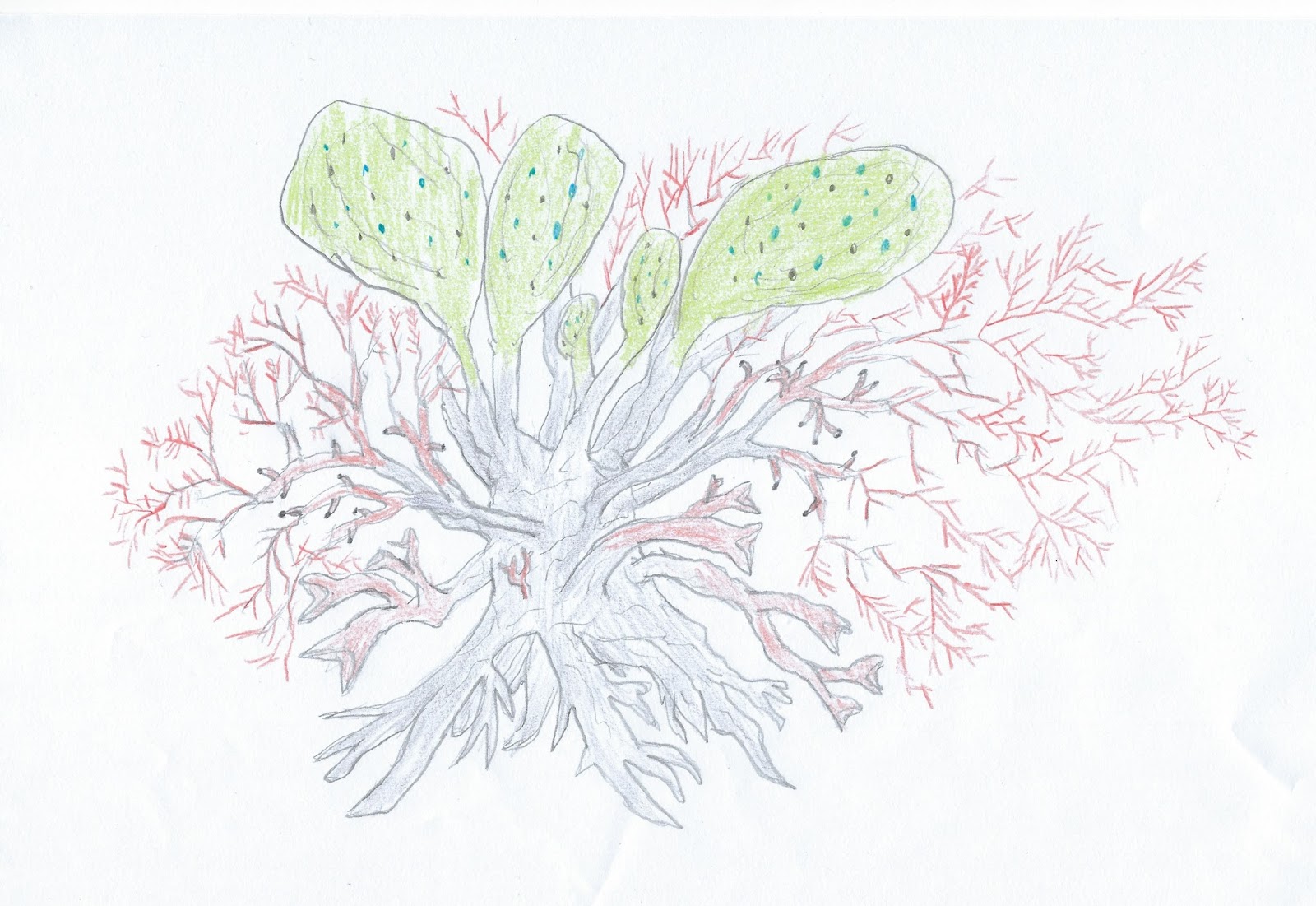
Haploformica dumus


Size: gametophytes are tiny, measuring from under a millimetre to a centimetre depending on the type. Sporophytes grow throughout their whole lives and can range from 15 cm to several meters, though are usually quite small, about a meter in height.

Diet: plants and small tube bugs brought back by gametophytes

Habitat: woodland, savanna

Colouration: gametophytes are often dark and dull in colour for camouflage. Sporophytes have grey bark and orange leaves.

Symmetry: gametophytes have radial symmetry. Sporophytes have roughly radial symmetry, with branching.

Reproduction: reproduces sexually with gametophytes

This is one of the many species of Amthalassa belonging to the mostly mobile group of plants. Many mobile plants, however – especially those belonging to the class Immota – are sessile during certain stages of their life, planting their roots into the ground permanently once they find a suitable location.

Like many other mobile plants, the gametophytes of Haploformica are capable of locomotion. The order it belongs to, Rapidasperma, is unique in that the role of these gametophytes aren’t limited to reproduction; they also defend the plant, do work for the plant, and gather food for it from its surroundings. They produce gametophytes almost all the time, and in fact most gametophytes are unable to perform their reproductive function.

Haploformica produces various different specialised gametophytes for different functions. The majority of gametophytes are workers, spending most of their time gathering food. They also produce gametophytes specialised for defence, able to attack any animal threatening the plant, and they can send out gametophytes that act as scouts.
A sample of specialised gametophytes

Haploformica trees are also able to produce male gametophytes, which are able to travel great distances to other Haploformica plants to merge with any female gametophytes inside. Any female gametophytes these plants produce never leave them, and unlike other gametophytes they can’t move on their own. Male gametophytes have a feathery appendage on their backs that allows them to be blown in the wind to cover greater distance, which they can also pull down if they wish to drop or stay on the ground.

When a tree grows a seed, this seed is then taken by a worker gametophyte to a suitable location. Unlike many other species in the class Immota they are much less active in their early years, once they start growing from their seed. Other immotans are active at first before finding a suitable location, then remain sessile.

The trees control their gametophytes with pheromones, and gametophytes also interact with each other this way to an extent. Like most mobile plants they do possess very rudimentary intelligence, in spite of seeming like an ordinary sessile plant, so they’re able to recognise danger and command their gametophytes in response to their surroundings. They even possess simple eyes. Their gametophytes are also capable of limited cognition, but to a far lesser extent than the trees themselves.

Taxonomic classification
Tree: Amthalassavitae
Domain: Parvigrana
Kingdom: Ramipedes
Phylum: Magnisemina
Class: Immota
Order: Rapidasperma
Family: Haploformicaceae
Genus: Haploformica
Species: H. dumus

Tuesday, 5 December 2017

The Hot Plains

While – other than ocean – most of the surface is covered in forest, drier steppes, scrublands and even deserts do exist on the planet. Due to how wet the planet is, however, these only exist under specific circumstances. Most dry areas on Amthalassa are found behind the rainshadows of tall mountains, which is exactly what the case is here, in the (relatively) hot plains of the north easterly parts of the southern land mass. With a mountain chain – formed from the collision of two continents – absorbing almost all moisture from the prevailing winds in the east, the liquid ammonia rain that is common throughout the rest of the planet is relatively rare here.

Rainfall isn’t quite infrequent enough for the area to qualify as desert; in fact it is wet enough for the growth of the purple, mossy plant common on the planet. Without many trees blocking light from the suns, this relatively dry tolerating moss is able to thrive in this environment. Although this “moss”, while far more resistant to moisture loss than true moss on Earth (primarily due to a layer of ammonia repelling substances it excretes), still loses ammonia at quite a rapid rate, it is able to adequately replace it by the production of its own ammonia. It can do this by metabolising nitrogen containing compounds in the soil. 

In the western parts of this area, further from the mountains and closer to the sea, is mossy savanna, with many spaced out kelp trees growing but not densely enough to form a canopy. As one approaches the mountains, these trees become smaller and more spaced out, until one eventually reaches the open, dry mossy steppes. These steppes are very hot, as this unshaded area is relatively close to the equator compared to other mosslands; it’s in a part of the world primarily dominated by tropical rainforests, close to the rain belt. In fact, that’s precisely what it would be there if mountains weren’t shielding it from rain. As one comes even closer to these mountains it gets drier, until the moss makes way for scrubland.


Minopuniceus vulgaris


Size: 1 metre in height

Diet: Moss

Habitat: Primarily the open steppes, but they can also be found in the savanna further west.

Colouration: An irregular pattern of purple and red on feathers, exoskeleton, and tail scales.

Symmetry: 8 fold radial symmetry

Reproduction: sexual, all hermaphrodites. Lays eggs.

This species belongs to a class of plurafistulates called Lactilinguida; an intelligent and social group of animals that takes care of its young. Lactilinguids even have specific built in adaptations to aid in ensuring the survival and wellbeing of their young; they keep their eggs and hatchlings in pouches in their mouths and feed them a substance comparable to milk through specialised tongues. Many lactilinguids possess feathers on their tails and bodies, developed from the sensory hairs most plurafistulates have on the surface of their exoskeletons. The function of these feathers is primarily for display purposes, but they can also be used in temperature regulation and most lactilinguids are warm blooded.

Monopuniceus vulgaris more specifically belongs to the family Muscivoridae, a family of primarily grazing animals characterised by the presence of a long proboscis reaching to the ground for eating moss. It evolved by tongues, which an ancestral species used for picking food off the floor, growing larger and joining together, until they eventually became a single tubular appendage. This proboscis is filled with many chitinous teeth, with thin and broad incisor-like teeth at the end of the proboscis used for cutting and picking up moss, as well as numerous blunt grinding teeth on the inside running all the way up. A proboscis such as this is essential for any large grazing species with a typical exoskeletid body plan, as they cannot simply bend their head down like an Earth horse. Without such a proboscis, in order to reach moss an animal must bend its legs until its mouth touches the ground. This was very energy consuming, especially for large animals that spend so much time eating. As such, species belonging to Muscivoridae have become the most successful grazers in the southern continent, out-competing any species that lacks this adaptation.

Minopuniceus vulgaris is a fairly small species, at least compared to most other muscivorids. They gather in herds for protection against predators, and usually have a few individuals “on watch” looking out at the horizon at any given time. They have a fairly complex social structure and, common to many lactilinguids, one’s ability to sing is connected to one’s rank. They sing mainly through their "nostrils", making very complex series of sounds using much lower pitches than most of their predators are able to hear. This singing is not only used to impress other members of the group, but it also allows for simple communication and lets individuals recognise who belongs to the group. Each group has specific unique songs that they create, so a stranger is easily identified.

They aren’t able to run particularly fast, which may seem disadvantageous given their small size and the number of predator species. However, since they’re very good at staying away from predators in the first place it seems they don’t really need to. They have highly developed senses, and uniquely for muscivorids have extensions of the exoskeletons around the hearing holes on their legs that funnel in sounds. Because of this, they are usually able to tell a predator is nearby long before the predator is aware of them, and will quickly move somewhere else to avoid them. Even when they’re sleeping, there will be members of the herd on watch surrounding them. When they detect danger a very low pitch warning call is made, alerting the rest of the herd without giving their presence away to predators.

Even with their ability to avoid predators, they are still will camouflaged. Unlike the many other lactilinguids, who possess brightly coloured feathers for display, Minopuniceus vulgaris is very dull in colour, with a mixture of reddish brown and purple in such a pattern so as to break up its form.

Eggs are usually kept in their pouches to avoid predation, and although they have well developed enough senses and awareness to keep their eyes on their eggs so long as they’re close by, they may need to leave quickly if a predator is sighted. If they don’t have their eggs with them, collecting them would simply slow them down. They don’t have limbs that allow them to bury eggs, either, unlike many other lactilinguids, so the most efficient thing to do is to keep their eggs with them. When they hatch the hatchlings will be kept in their mother's pouch most of the time until they’re old enough to walk on their own.

There is no exact “alpha” in the group, not one specific individual at least, but there is a hierarchy. The healthiest and most intelligent members of the herd are at the top of this hierarchy, and help maintain order and break up the few fights that do occur. These high ranking individuals are seen as the most ideal mates to other members of the herd, although not all individuals will get the opportunity to mate with them. This is a large motivator among the species for moving upwards in the social hierarchy, as it will offer them the opportunity to mate with other individuals at the same level; mating between the different ranks is relatively uncommon while the changing of rank isn’t.

A common bonding activity between individuals is the removal of parasitic tube bugs from their feathers. This is done using the long and flexible outer tongues and, although the species is primarily herbivorous, they will eat these bugs. This is not only important for group cohesion, but is absolutely essential for maintaining hygiene since these blood sucking parasites can become a serious issue if left unchecked. Grooming also allows individuals to move upwards in the hierarchy through the forming of bonds with high ranking herd members. When an individual grooms an animal higher up in the group it will often be very one sided, with the high ranking individual receiving far more cleaning than they give in return. The less dominant herd members tolerate this, knowing that treating them well will benefit them and increase their chances of improving their status. High ranking individuals get far more grooming because of this, and end up far healthier as a result. Individuals close to the bottom of the group hierarchy will often be very infested with parasites. Members of a herd will get most of their grooming from those at the same level as them and below them in the hierarchy. 

In order to reduce competition among their descendants, lower ranking individuals are often prevented from reproducing as much. High ranking individuals, during grooming sessions, will release a specialised milk into the cloaca of low ranking individuals. This specialised milk contains hormones that will reduce the animal’s fertility. They are still able to reproduce, but it is less frequent, and they put up with this since the young they do have have a better chance of survival if they stay in the group and maintain good relations. Their sense of smell is developed enough that they are able to recognise this substance, and know exactly what’s happening to them; in fact a higher ranking herd member will refuse to groom with an individual who keeps doing this to them. Low ranking members, however, can’t be as picky over who they groom with.

In spite of the complex group relationships, this is a relatively peaceful species and physical fighting is very rare within the herd. Due to their susceptibility to tube bug infections, and the fact their tongues aren’t long enough to effectively clean themselves, they are very dependent on grooming. As such, they attempt to keep their relationship with everyone as good as possible and will avoid conflict. 

Taxonomic classification
Tree: Amthalassavitae
Domain: Parvigrana
Kingdom: Hydrogenia
Phylum: Plurafistulata
Superclass: Exoskeletida
Class: Lactilinguida
Order: Herbivora
Family: Muscivoridae
Genus: Minopuniceus
Species: M. vulgaris

Northern mossland earthsnake 

(Solivora septentrionalis campus)


Size: 25 to 50 centimetres long

Diet: soil, plants, tube bugs

Habitat: under the soil in mosslands and savanna, can also be found in scrubland

Colouration: dull brown, grey, or reddish brown exoskeleton

Symmetry: 8 fold radial

Reproduction: sexual or asexual; hermaphroditic, but can self-fertilise if necessary. Lays eggs.

This species belongs to a group of burrowing plurafistulates, Solivorini, who are capable of actually consuming the soil they burrow through and gaining nutrients from it. In this sense they tunnel through the ground much like an earthworm from Earth. They have a high lung capacity and muscles resistant to hydrogen deprivation, allowing them to survive long periods of time buried in the ground with no air. In addition to this, they have hard, powerful beaks well adapted to dealing with earth, and eight strong limbs with spade-like claws.
They have long tails with a very flexible exoskeleton that has lots of segments and a thinner structure to sacrifice toughness for mobility. This gives the animals a great deal of maneuvererability underground.

The species can be found throughout a wide range of environments, from rainforest to mountains. This particular subspecies inhabits the mosslands of the hot plains.

They tend to dig extensive burrows to hide from predator species. Although they could simply hide buried in the soil, they would need to frequently come up for air, so they often dig networks of open spaces deep under the moss to go to to rest. Not only do they eat soil, but they feed on the small tube bugs that frequently come to their burrows to hide from the light, as well as whatever plant matter they come across.

They are frequently preyed upon by the acuti that inhabit the area, using their tongues to probe the earthsnake holes they construct.

Not belonging to the class Lactilinguida, they do not care for hatchlings. However, they do protect their eggs, and they make sure to keep them safe and deep underground. Once the eggs have hatched earthsnakes will usually leave them to fend for themselves. New hatchlings are already quite capable and dependent, born with all the instincts they need to survive.

Taxonomic classification
Tree: Amthalassavitae
Domain: Parvigrana
Kingdom: Hydrogenia
Phylum: Plurafistulata
Superclass: Exoskeletida
Class: Sectatestae
Order: Bidigiti
Family: Soliserpentidae
Tribe: Solivorini
Genus: Solivora
Species: S. septentrionalis
Subspecies: S. s. campus

Northern mossland Venator 

(Leolupus septentrionalis)


Size: 1 metre in height, 2.5 metres long including tail (1.7 metres not including tail)

Diet: meat

Habitat: mossland, savanna and scrubland

Colouration: various shades between red, orange and brown

Symmetry: bilateral (evolved from radially symmetric animals)

Reproduction: sexual, all hermaphrodites. Lays eggs.

Venators are highly successful apex predators throughout the southern continent, and can be found in almost all environments. For more efficient chasing down and catching of prey, they have moved away from the radial symmetry common among the Plurafistulata phylum, developing mouths further to the “fronts” of their bodies and limbs optimised for running in a specific, singular direction. In radially symmetrical plurafistulata, each specific class of tubular segment is identical; for example every cardiorespiratory segment is identical to another cardiorespiratory segment. However, this isn’t the case for venators, and as such they are able to have much more specialised limbs.

Venators use only (at most) six of their limbs for locomotion, with the front six instead specialised for the catching of prey and tearing up of flesh. Although venators can have up to twelve limbs, they usually only have four eyes; two at the front for depth perception, with the others – two at the sides of their heads and four at the sides of their bodies – used for peripheral vision. Although most depend primarily on their facial graspers as weapons, many species are also able to attack effectively with the claws of their front legs.

They are highly intelligent animals and usually hunt in packs. Many species have complex group structures and engage in intelligent social behaviour, and as such it is hard to say whether they’re more or less intelligent as a class than lactilinguids. Both groups contain species that are among the most intelligent on the planet, although they both seem to have a different kind of intelligence. Venators are able to plan and think ahead while hunting, while species belonging to Lactilinguida have more complex social interactions and group dynamics. Also, lactilinguids have greater creative intelligence and memorisation, while venators are more rigid in their thinking.

With the more efficient placement of their mouth at the front of their body, rather than underneath, along with the superior running ability owed to their bilateral symmetry, the venator is able to out-compete all other groups of predators. Most non-venator carnivorous species in the southern continent only go after small prey.

Leolupus belongs to a branch of relatively small, but agile and fast running venator. They have a relatively high lung capacity, and allow air to flow into their mouths and out through the nostrils at the sides of their bodies as they run, making use of the wind to power their breathing rather than their own muscular contractions alone. The fact that the interior of their mouth extends under their belies (a product of their evolution from more standard plurafistulates) allows them to do this, with air entering their mouths at the front and travelling under their bodies to enter the larger lungs at their sides.

In many exoskeletid species lung capacity is limited by the brain in the surrounding nervous segments, these segments possessing a relatively hard outer casing near the bottom to protect the brain. So the rigidity of these encasings would normally limit how much the lungs can expand. However, in the family Leolupus belongs to the lungs are slightly further up in the body relative to the brain, and the hard encasings themselves are segmented to give them greater flexibility without sacrificing protectiveness too much. Also, since venators lack radial symmetry and are therefore able to have more specialised segments, the largest lungs – the four near the front two pairs of legs – are able to have more space since many of the organs that would normally surround them can instead be more concentrated at other parts of the body.

Not only are they able to be more energetic, owing to their relatively light build and high lung capacity, but they have extremely powerful bites with their facial graspers. Due to the specialisation of segments that their bilateral symmetry allows, the space right at the front of the body can be devoted almost exclusively to muscle. With much smaller lungs and hearts there there is plenty of space, which allows the appendages there to be extremely powerful. They also have incredibly sharp claws at the ends of each of these appendages, and the interior is covered in a row of sharp teeth that many other venators lack. They also have a flap of skin between the two lower facial graspers to prevent food from falling out while it’s being grinded by these teeth.

What sets members of the genus Leolupus apart from other venators is the presence of extremely powerful back legs used for leaping to catch prey. Not only are these legs extremely muscular, but they possess a system of hydraulics that allows them to extend suddenly and powerfully, but not rapidly. Due to the possession of numerous heartlets in the segments of plurafistulates, it is not uncommon for such systems of hydraulics to evolve on Amthalassa. Leolupus is able to pump blood into a specific bladder near the back legs. A series of long fluid filled organs connected to this bladder line the inside of the back legs. As Leolupus is chasing prey pressure is built up in this bladder, prevented from entering the legs by a powerful sphincter. When Leolupus is close enough to its prey and enough pressure is built, this sphincter relaxes and fluid from the bladder explosively escapes into the legs. This forces the legs to straighten, and the animal leaps forwards towards its prey at an incredibly speed. Since this building up of pressure takes time, and can therefore not be used for rapid movement, Leolupus does not use this method of leg extension for normal running; only right at the end for a final burst of speed.

Leolupus septentrionalis, specifically, has many adaptations for dealing with the heat of the hot climate it inhabits. During hot weather or times of intense activity, it will extend one of its tongues out, increase blood flow to it in order to lose heat. To prevent this from causing moisture loss, the mouth of Leolupus septentrionalis is relatively dry most of the time, and only produces saliva when it’s eating.

Taxonomic classification
Tree: Amthalassavitae
Domain: Parvigrana
Kingdom: Hydrogenia
Phylum: Plurafistulata
Superclass: Exoskeletida
Class: Venatores
Order: Insectilupiformes
Family: Minolupidae
Genus: Leolupus
Species: L. septentrionalis


Crustalepus


Size: 10 to 20 centimetres in height (can deviate from this depending on species)

Diet: tube bugs, grassbugs, plants, mobile plant gametophytes

Habitat: earthsnake burrows in dry climates

Colouration: varies from dull brown to reddish to purple

Symmetry: radial, 8 fold

Reproduction: sexual, all hermaphrodites. Lays eggs.

The crustalepus is an order of the class Monothecia, a branch of Exoskeletida that developed a single, seamless exoskeleton encasing its outer body, the legs being the only jointed part. Since muscle above the legs isn’t needed to support the tail, the space that would otherwise be taken up by this muscle can instead be devoted to something else, or simply left empty to reduce weight. In the case of crustalepus, this additional space is filled with overgrown leg muscle used to allow the animal to make powerful leaps. In most species of crustalepus, hopping is the primary means of locomotion, much like the frogs or rabbits of Earth. Elastic energy is stored in leg tendons, allowing them to make frequent small hops in an energy efficient manner. There is also a system of hydraulics similar to that of Leolupus that allows the crustalepus to make less frequent but far greater leaps. The latter is used mainly to escape predators, rather than in normal movement.

In the hot plains and the surrounding areas, most species of crustalepus are from the genus Solibufo. These small animals make use of the burrows dug out by earthsnakes to hide from predators, since it’s the only way of truly hiding in the wide open landscapes they inhabit, free of any cover. Although they can use their two-clawed limbs to dig to an extent, their ability to do so is greatly limited, and is mainly used to modify already existing burrows rather than to make their own. The ability to dig varies from species to species, with those possessing limbs more adapted to digging sacrificing jumping ability as a result.

Solibufo uses its long and flexible tongues to catch tube bugs, which have sticky pads on the end for this purpose. All monothecians possess long tongues for the purpose of mating, so it’s only natural that Solibufo would make use of this already existing feature in its evolution for a different function. Due to the inflexible nature of the monothecian body, especially the ends of their tails, tail-to-tail mating is made incredible difficult. Direct tail-to-mouth mating, as many other species practice, is even harder for such creatures. Instead, the individual receiving sperm inserts its long and flexible tongue into the tail’s cloaca to extract semen, which is then inserted into the uterus through the birth canal when it’s brought back into the mouth.

They are primarily preyed on by Campifelis, with larger and better adapted predators like venators mostly ignoring them and choosing to focus on bigger animals. The shells of many species are relatively thick because of this, offering protection against predation. They needn’t be too strong, however, as Campifelis has nowhere near as strong a bite as venators do.

Taxonomic classification
Tree: Amthalassavitae
Domain: Parvigrana
Kingdom: Hydrogenia
Phylum: Plurafistulata
Superclass: Exoskeletida
Class: Monothecia
Order: Crustalepores
Family: Crustabufonidae
Genus: Solibufo


Tube Bug


Size: 3 to 5 centimetres

Diet: plants, sometimes blood

Habitat: earthsnake holes

Colouration: light brown

Symmetry: bilateral

Reproduction: sexual. Mating occurs between males and females. Females lay eggs, which hatch small worm-like larvae.

“Tube bug” is a name referring to a specific group of animals within the phylum Fistularia; animals very distantly related to the plurafistulates that branched off before the development of multiple segments. They consist of a single, tubular segment with the same basic layout as those of Plurafistulata only far less specialised. At the very middle is the digestive tract, with a couple of muscular blood vessels next to it slowly drawing haemolymph around the body. On the outside of this tube is a layer of muscle surrounded by a protective epidermal layer. Unlike the tubes of plurafistulates, fistularians have branching trachea for respiration, as well as an open rather than closed respiratory system. Since they use their trachea to bring hydrogen to their tissues, their blood very rarely has a hydrogen carrying protein, but when it does it’s usually a substance separate to the one used by plurafistulates. This pigment, which is unknown to Earth scientists, is blue when dehydrogenated and green when hydrogenated, and is dissolved in the haemolymph rather than carried by cells. 
.
Tube bug refers to any animal belonging to the class Fistulacimices, a group of fistularians that have developed numerous muscular hydrostat legs. They have a single large compound eye at the front possessing a reasonably wide field of view, which is surrounded by numerous small ocelli. Most species possess a pair of flexible mandible-like radulae under their eye used for the manipulation and grounding up of food. Since tube bugs lack an exoskeleton they are very susceptible to moisture loss and as such prefer very wet climates, much as slugs and snails do on Earth. Their skin is also very weak against sun damage.

Numerous species of tube bug within the genus Subterreruca can be found in the hot plains. Throughout daylight hours they stay within earthsnake holes to hide from the suns, only moving from one earthsnake hole to another during the night.

Although they are somewhat more resistant to moisture loss than many other tube bugs, Subterreruca are still at a high risk of drying up, and so will often tunnel into earthsnake softened soil to keep dry. They are always on the lookout for a source of ammonia, and some species will drink the blood of earthsnakes or sometimes even crustalepus if they’re desperate and feeling brave (in the case of crustalepus, they will have to find an area of unprotected skin, such as the mouth, or a lashing tongue).

They have a few adaptations that help them cope with moisture loss, even with the measures they take to avoid it. They are able to produce their own ammonia through the breakdown of nitrogen containing chemicals in their foods, and most species possess an ammonia sack that safely stores fluids, slowly releasing it at the same rate moisture is lost. The moisture sacks allow them to consume copious amounts of ammonia whenever they find it, visibly growing fatter and more bulbous as they drink. However, these sacks have the disadvantage of making them more susceptible to predation, even from other tube bugs that find the ammonia they’re carrying tempting.

Taxonomic classification
Tree: Amthalassavitae
Domain: Parvigrana
Kingdom: Hydrogenia
Phylum: Fistularia
Class: Fistulacimices
Order: Millipedes
Family: Brevierucidae
Tribe: Pellerucini
Genus: Subterreruca


 Northern Mossland Acutus 

(Campifelis septentrionalis)


Size: 70 centimetres

Diet: meat, occasionally grazers but usually small animals or sometimes tube bugs

Habitat: mossland

Colouration: feathers can be patterns of green, blue, black and red

Symmetry: 10 fold radial symmetry

Reproduction: sexual, all hermaphrodites

Campifelis septentrionalis tends to hunt in groups, unlike many other acuti. Without much plant cover it is hard for them to sneak up on prey, a common tactic in the solitary hunting of many other members of the order. With other, more proficient predators like the venator competing with them, these animals usually focus on smaller prey. The largest they will hunt is Minopuniceus vulgaris, but venators prey on them too so they often focus on small animals venators ignore. Often, they will put their claws in earthsnake holes to grab whatever earthsnakes and crustalepus they can get. These smaller animals are hunted in the more typical solitary manner, as they only need to ambush larger and more intelligent prey.

Although in no way of comparable speed and swiftness to the venators, Campifelis still has a reasonable running ability, at least compared with other acuti. Without much tree cover they rely on their ability to chase down prey far more than many other members of this group. They also have effective means of cooling off in the hot climate, such as sticking out their tongues during intense activity in a similar manner to many other species in the area, such as the northern mossland venator. And like this species of venator, their mouths don’t salivate most of the time, so they lose very little moisture when they do this. As a further measure, their nostrils are also slit shaped to prevent moisture loss. 

Acuti are lactilinguids, and as such take care of their young in pouches and provide milk for them. Like many lactilinguids, they engage in complex group behaviour and possess brightly coloured feathers. Although they are predators, they are also preyed upon by venators. Their bright colours pose no issue, however, since unlike lactilinguids most venators are colour blind. From a venator’s point of view, they are able to blend in effectively with their surroundings. Since they make little effort to sneak up on prey, their bright colours pose no issue here, either.

They usually live in hierarchal packs with a single dominant alpha and many high ranking individuals below this alpha. Dominance is determined by strength as well as how impressive their feathers are. The bright colouration is an especially important consideration when it comes to choosing a mate, and individuals with the brightest colours get to mate with other individuals of equally bright colours. Fighting happens quite a lot within a group. 

To reduce competition for food among offspring, lower ranking members are prevented from mating by more dominant acuti damaging their genitals in combat. They have evolved so their genitals can heal quite effectively as a result of this, but it still greatly reduces how much lower ranking individuals are able to reproduce, and in general the lower ranking an individual is the less offspring they tend to have. Individuals are primarily monogamous, but they don’t mate for life. Instead, they have a single mate at a given time which changes every now and again, usually in response to changes in group dynamic. This has the benefit of increasing genetic diversity, and individuals are always competing to win over each other’s mates as a result.

While the venators of the region will usually hunt during day, acuti prefer nocturnal hunting, when most grazers are sleeping. Although they rely primarily on sight this poses no issue, as they have very good night vision, often hunting by the light of the two more distant stars of the Amthalassa system (or the “night suns”). During times of the year when these stars are out during day rather than night, they will instead favour hunting during twilight over the middle of the night. 

Taxonomic classification
Tree: Amthalassavitae
Domain: Parvigrana
Kingdom: Hydrogenia
Phylum: Plurafistulata
Superclass: Exoskeletida
Class: Lactilinguida
Order: Acuta
Family: Minoroacutidae
Genus: Campifelis
Species: C. septentrionalis


Worms


Countless species of the class Vermes – worm-like fistularians – can be found in the soil. Here they obtain nutrients by consuming the earth as they tunnel through, among which is oxygen in the form of water ice.


Plains Pteroceph
(Helicivultur septentrionalis)


Size: 30 centimetres

Diet: meat

Habitat: Mossland and savanna

Colouration: grey exoskeleton

Symmetry: 8 fold radial symmetry (tail deviates from this symmetry)

Reproduction: sexual, all hermaphrodites

Pterocephalia (or “helicopters”) is a very large order of featherless, semi-cold blooded lactilinguids with a very unusual means of flying. Their sail bearing tails can be best described as a singular “wing”, but instead of flapping it to fly in a normal bird-like fashion this wing is rapidly spun in a complex helical pattern, allowing it to fly much like a helicopter. 

Coincidentally, this is the same way a branch of flying tube bugs has developed flight. In spite of this unusual method of flight, this is a highly successful lineage and they have become the most dominant flyers of the planet other than floaters, filling most niches birds do on Earth.

One of the many species of pterocephs inhabiting the hot plains is Helicivultur septentrionalis, a species of scavengers. They will fly around looking for carcasses left behind by predators, or animals who have died of natural causes, then swoop down to tear apart whatever flesh is left with their sharp, grasping claws and muscular serrated tongues.

Taxonomic classification
Tree: Amthalassavitae
Domain: Parvigrana
Kingdom: Hydrogenia
Phylum: Plurafistulata
Superclass: Exoskeletida
Class: Lactilinguida
Order: Pterocephalia
Family: Hamimanidae
Tribe: Linguamanini
Genus: Helicivultur
Species: H. septentrionalis

Feather bug (Plumacola)


Size: 0.5 to 1 centimetres

Diet: blood, chitin flakes

Habitat: feathers

Colouration: varies depending on the colour of the specific species they inhabit. Their colour matches the colour of the feathers.

Symmetry: bilateral

Reproduction: sexual. Mating occurs between males and females. Females lay eggs, which hatch small worm-like larvae.

These parasitic tube bugs live in the feathers of lactilinguid animals, mostly those of grazers, and almost constantly suck their blood for moisture. They prefer the feathers of the tail, although if they’re on more solid exoskeleton they can still find the gaps between each plate. Feathered species will often allow a crustalepus to eat the feather bugs out of their feathers, forming a mutually beneficial symbiotic relationship.

Taxonomic classification
Tree: Amthalassavitae
Domain: Parvigrana
Kingdom: Hydrogenia
Phylum: Fistularia
Class: Fistulacimices
Order: Parasiteacimices
Family: Sanguineacimecidae
Genus: Plumacola


Northern Cursor (Cursor ferventis)


Size: 2 to 2.7 metres up to start of tail flaps

Diet: moss, shrubs

Habitat: mossland, savanna (C. f. savanna)

Colouration: green, blue, and yellow feathers and tail flap, brown or grey exoskeleton with some green and blue colouration

Symmetry: 8 fold radial symmetry, tail flap deviates from this symmetry

Reproduction: sexual, all hermaphrodites, lays eggs

Minopuniceus isn’t the only member of the family Muscivoridae to inhabit the hot plains. Well adapted to a mossland environment, species within this family can be found everywhere, ranging in size and utilising a variety of different life strategies. Whereas Minopuniceus uses its well-developed senses and camouflage to avoid predators, the larger Cursor, with its long legs and slender build, focuses on running.

Like Minopuniceus, they possess a proboscis and live in larger herds, but they differ from these relatives by the presence of tail flaps for cooling off and for display. With their larger size and more energetic lifestyle, heat poses a greater issue to them. So in order to regulate their temperature the blood vessels in these flaps dilate and heartlets pump more blood towards the tail, allowing these animals to cool off. But temperature regulation and display aren’t the only functions their tail flaps serve; when a Cursor is running, it will beat its tail in such a way as to a) push itself more firmly against the ground to increase traction and b) provide thrust in the direction of movement. Because of this, the Cursor is an extremely proficient runner, rivalling the venators or the area in speed. Unlike the venators, they lack bilateral symmetry, but as prey animals their 360 degree peripheral vision and ability to instantly begin running in any direction without turning may offer them more of an advantage than bilateral symmetry would.

To be more aerodynamic during running, an adaptation common to all members of the Cursor genus is the ability to retract their long proboscis up towards their mouth by folding the skin. This gives the Cursor proboscis its characteristic ridged, folded appearance.

The species Cursor ferventis has additional adaptations that allow it to better deal with the heat while still staying fairly active. Firstly, it has a slightly slimmer build than many other Cursor species found further south. They also regularly cool themselves off by using their tail flaps as a fan.

Since venators are colour blind, and acuti rarely bother hunting animals as large the Cursor, they are able to be far more brightly coloured than smaller herbivores of the area without the risk of alerting themselves to predators. Not only do they have extremely brightly coloured feathers, but the skin of their tail flaps are very bright too. The actual shading of their bodies, however, is patterned in such a way as to break up their form. This way, from the point of view of a venator, they are actually surprisingly well camouflaged. Still, their large forms, given the open space of their habitats, do make them hard not to notice when they’re close by, although camouflage still offers a strong enough advantage to be selected for.

There is a savanna subspecies, Cursor ferventis savanna, which is slightly smaller and more agile than the mossland variety further east, but isn’t able to reach quite as high a top speed. Their feather patterning is slightly different, with blotches and stripes that allow it to camouflage itself against kelp trees.

Taxonomic classification
Tree: Amthalassavitae
Domain: Parvigrana
Kingdom: Hydrogenia
Phylum: Plurafistulata
Superclass: Exoskeletida
Class: Lactilinguida
Order: Herbivora
Family: Muscivoridae
Genus: Cursor
Species: C. ferventis


Niveapluma 

(Niveapluma occidentalis)


Size: usually 8 to 15 metres in height (without tail straightened out)

Diet: moss, bushes and shrubs

Habitat: mossland, savanna

Colouration: bright white feathers and exoskeleton

Symmetry: 8 fold radial symmetry, tail flap deviates from this symmetry

Reproduction: sexual, all hermaphrodites, lays eggs

Niveapluma occidentalis is an incredibly large grazing animal – far bigger than other grazers like Cursor – which, owing to its size, is relatively safe from any predators. In fact, their size developed as an adaptation to the fast and efficient venators of the region, which pose a great danger to most other animals large enough to interest them.

Animals on Amthalassa are able to grow far larger than on Earth. Although the surface gravity isn’t that much less, at around 80% as strong as Earth’s, liquid ammonia is much less dense than water. Because of this – and since most living organisms largely consist of ammonia – animals on Amthalassa are also much less dense water, usually about 70% as dense. So really they weigh about as much as an Earth animal of comparable size and shape would on a planet with just over half Earth’s gravity. In the case of most lactilinguids, in particular, the maximum size they can reach is even less limited due to a) a more efficient respiratory system and b) the fact their young are far smaller than adults, greatly reducing the gestation period of larger species. Still, they need incredibly muscular and stocky legs to support their enormous weight.

Heat is a serious danger to such large animals, especially in the hot plains with few trees to shield from the suns. In fact, heat is likely a far more common cause of death than predation. Because of this, they have developed a number of adaptations for coping with the temperature. One such adaptation is a thin, high surface area tail fin similar to that of Cursor, although it most likely (in spite of both groups belonging to the same family) developed this independently. It is able to increase blood flow to this tail fin much in the same way Cursor can. Their tails in general are also relatively slim. This alone isn’t enough to keep these enormous animals cool in the blistering heat. The animals also have extremely loose and wrinkled skin on their proboscis to increase surface area as much as possible, and they will regularly stick their tongues out in much the same way as many other species in the hot plains. In fact, they do this far more often than other species, and will have at least one or two tongues out almost all the time. Since they’re relatively slow moving, inactive creatures, having them out like this rarely gets in the way.

One noteworthy adaptation to the heat, which is a defining feature of this particular genus, is their blindingly white feathers and exoskeleton. This protects them by reflecting most incoming stellar radiation. Although their feathers appear entirely white, the side facing the body is black to absorb any heat coming from within the animal. Lactilinguids also usually have blood vessels in their feathers, so Niveapluma is able to cool off by increasing the blood flow here, using small muscles to make their feathers stand more erect, and allowing the wind to carry this heat off. In fact, the aid these feathers give to temperature regulation – both allowing them to cope with heat and insulating them from the cold – is part of the reason lactilinguids are so successful in the southern continent.

Taxonomic classification
Tree: Amthalassavitae
Domain: Parvigrana
Kingdom: Hydrogenia
Phylum: Plurafistulata
Superclass: Exoskeletida
Class: Lactilinguida
Order: Herbivora
Family: Muscivoridae
Subfamily: Magninae
Genus: Niveapluma
Species: N. occidentalis


Hot Plains Floater 
(Rectabulla campus)


Size: 1.3 to 1.7 metres (not including tail)

Diet: Pterocephs, plants, small animals

Habitat: the air above open plains

Colouration: brown or orange exoskeleton, sometimes grey. Plant portion is purple

Symmetry: bilateral (evolved from radially symmetric animals)

Reproduction: sexual, all hermaphrodites, lays eggs. Plant portion produces seeds. When mating occurs, the animals pollinate their plant portions, and after eggs hatch the seeds are planted into the hatchlings. The plants can also reproduce asexually to produce numerous clone “back up” seeds

"Floater" refers to the group of organisms belonging to the class Folivesicata, animals that have developed a means of flight unknown of on Earth. Instead of flying per se, they instead remain airborne by floating, possessing adaptations that make them much lighter than air. They achieve this through a remarkable product of evolution; they have developed an extreme case of symbiosis with a specific lineage of kelp plants, to the extent that neither can function properly without the other. Their belly has a specialised cavity where a kelp plant leaf is contained, rooting itself into the animal's flesh where it is provided with nutrients. This “leaf” then grows to an enormous size, most of which consists of its hydrogen sack. It is this overgrown hydrogen sack that allows floaters to remain buoyant in the air. Numerous additional leaves stick out of this hydrogen sack in order to soak in sunlight. This sack is held securely in place by a set of ribs, which are actually modified legs that have evolved to become stiffer and harder. Curiously, this actually means their hearing organs are located in their ribs. 

Due to this method of remaining airborne there has been very little need for floaters to develop powerful wings to remain in flight. Instead, they merely use their tails as rudders to guide their movement, swimming through the thick atmosphere like fish.

Floaters dominate the skies. However, they do not fill the exact same niches as helicopters do, as the nature of their flight means floaters aren’t as quick or agile. While pterocephs are more like a plane or a helicopter, floaters are like blimps or hot air balloons. Floaters can stay in the air with very little energy compared to pterocephs, slowly drifting through the sky. They are also able to become much larger than a pteroceph can, since weight isn’t as much of an issue for them. While helicopters fill most niches occupied by birds on Earth, it is difficult to compare floaters to Earth life.

The most common species found in the hot plains, Rectaebulla campi is a member of a particularly small, slender and agile order of floater. They are quick and energetic by floater standards, and many species are predatory and will attempt to chase down prey. 

Rectaebulla campi often hunts pterocephs, using its barbed fast lashing tongue to overcome the inherent plodding slowness of floaters (even these more agile ones). They usually depend on pack hunting and ambushing to catch the much faster pterocephs, however, and will supplement their diet with a variety of shrubs. They also catch small ground animals such as earthsnakes, using their long tongues to probe their burrows. However, since acuti also hunt earthsnakes, they usually prefer the relative lack of competition helicopters offer. Although more flexible than most other floaters, they have relatively stiff bodies compared to more closely related species since they depend more on their tongues.

Taxonomic classification
Tree: Amthalassavitae
Domain: Parvigrana
Kingdom: Hydrogenia
Phylum: Plurafistulata
Superclass: Exoskeletida
Class: Folivesicata
Subclass: Vesicaspecata
Order: Longivesicata
Family: Rectabullidae
Genus: Rectabulla
Species: R. campus


Yellow Mossland Grassbug 

(Bulbiherba flava)


Size: 4 centimetres tall on average, leaves the ground at 1 centimetre

Diet: plants, soil

Habitat: savannas and mosslands

Colouration: yellow or pale yellow leaf

Symmetry: rough radial symmetry, with random branching

Reproduction: reproduces sexually with gametophytes (leaves gametophytes on moss, which other grassbugs find using their sensory branches), is able to self-pollinate, plants its own seeds in the ground

While most parts of Amthalassa is wet enough that tube bugs can act as rough equivalents to insects on Earth, they are not able to cope as well with drier or brighter climates. Because of this, they are outcompeted by mobile plants of the order Herbacimices in such environments. Normally these “grassbugs” would be too slow to outperform tube bugs, but this is not the case in situations where their greater resistance to moisture loss is enough of an advantage to outweigh this.

The most common species in the hot plains, Bulbiherba flava has a round, bulbous stem used to store nutrients, unsaturated hydrocarbons, and ammonia. Since tube bugs are relatively rare outside of earthsnake holes, at least compared to other parts of the world, grassbugs fill many of the same niches tube bugs otherwise would and are an extremely common sight to anyone paying close attention to the ground beneath them.

To cope with the dry climate, Bulbiherba flava is able to produce its own ammonia via biochemical reactions. It uses the roots underneath its body for feeding, absorbing nutrients out of the soil or out of plants. However, unlike many other mobile plants, they don’t outright “root” themselves, and are usually quite active, albeit very slowly.

Grassbugs are often eaten indiscriminately by grazers along with the surrounding plant matter, and unlike many larger mobile plants, Bulbiherba flava has developed very few defences against this. Instead, they simply maintain a high enough breeding rate to counteract the high level of mortality this causes. However, if they see a large animal coming they will attempt to do what little they can to avoid it; they’re still intelligent enough to recognise danger.

The male gametophytes they produce are macroscopic (albeit tiny) and mobile, and they have developed enough senses to find grassbugs themselves. Millions of male gametophytes are left behind on the moss when a grassbug is fertile, the creature making sure to spread them as widely as possible, and only a small fraction will find female gametophytes. Grassbugs are similarly well equipped for finding male gametophytes, using their sensory branches to find any that have been excreted onto the moss by another grassbug. The male gametophyte of Bulbiherba flava consists of a central body radially surrounded by numerous hair-like tentacles.

Taxonomic classification
Tree: Amthalassavitae
Domain: Parvigrana
Kingdom: Ramipedes
Phylum: Magnisemina
Class: Monophylla
Order: Herbacimices
Family: Folicimicacae
Genus: Bulbiherba
Species: Bulbiherba flava

Green spotted mossland shrub 

(Viridifrutex)


Size: 15 to 50 centimetres

Diet: tube bugs, grassbugs, grassbug gametophytes. Absorbs nutrients from the soil through its roots

Habitat: savannas and mosslands

Colouration: orange leaves. Specialised, bulbous green branches with blue, turquoise and black spots

Symmetry: rough radial symmetry, with random branching

Reproduction: reproduces sexually with gametophytes, is able to self-pollinate, plants its own seeds in the ground

This group of mobile plants have, due to their risk of predation at the hands of large grazers, developed a means of defence in the form bright warning colours. They have a group of large specialised branches with round green growths on them meant to resemble a common type of poisonous fungus found in the area. These fungi have developed their bright colouration as a means of warning animals of their toxic nature, and since most animals have learned to stay clear of such coloured organisms they will also avoid eating Viridifrutex, much to the plant’s benefit.

Taxonomic classification
Tree: Amthalassavitae
Domain: Parvigrana
Kingdom: Ramipedes
Phylum: Magnisemina
Class: Radicipedes
Order: Acidiramiorae
Family: Insectivoraceae
Genus: Viridifrutex

Spiked mossland shrub


Size: 15 to 50 centimetres

Diet: moss. Absorbs nutrients from the soil through its roots

Habitat: savannas and mosslands

Colouration: red leaves, blue and black stripes on shells

Symmetry: rough radial symmetry, with random branching

Reproduction: reproduces sexually with gametophytes, is able to self-pollinate, plants its own seeds in the ground

Another group of mobile plants has developed armoured shells attached to some of its branches, capable of protecting it from grazing animals. These shells have spikes on the outer edge, and when the plant sees an animal approaching it is able to move its branches to cover its body with these shells for protection. The rest of the time, however, these branches are spayed out away from the body so the shields don’t obscure sunlight. These shells are brightly coloured, with blue and infrared stripes to alert animals of their presence. Most animals, when made aware of these plants, will avoid them, since the spikes makes swallowing them unpleasant.

Taxonomic classification
Tree: Amthalassavitae
Domain: Parvigrana
Kingdom: Ramipedes
Phylum: Magnisemina
Class: Radicipedes
Order: Acidiramiorae
Family: Putamenaceae
Genus: Spicarumfrutex